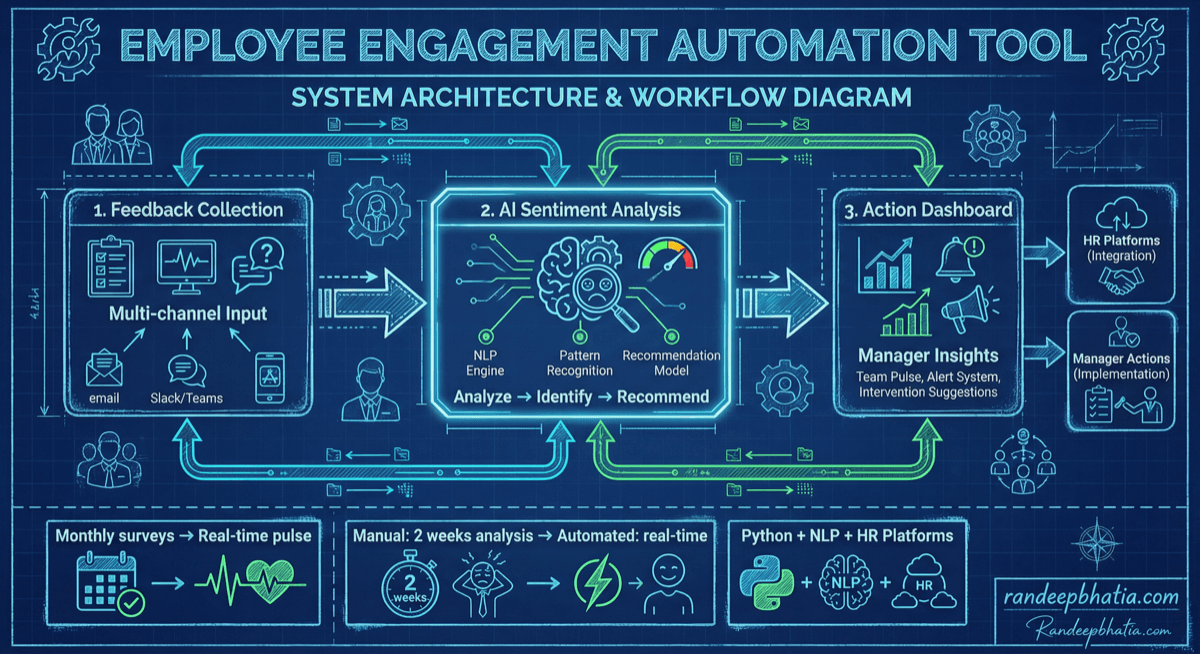
The Problem
On Monday you tested the 3 prompts in ChatGPT. You saw how extract → analyze → recommend works for engagement data. But here's the thing: you can't ask your HR team to copy-paste 500 survey responses per quarter. One HR manager spending 8 hours analyzing feedback? That's $400/quarter in labor costs. Multiply that across quarterly surveys and you're looking at $6,400/year just on engagement analysis. Plus the 2-week delay between survey close and actionable insights means you're always reacting, never preventing.
See It Work
Watch the 3 prompts chain together automatically. This is what you'll build.
Watch It Work
See the AI automation in action
The Code
Three levels: start simple, add reliability, then scale to production. Pick where you are.
When to Level Up
Simple API Calls
- Run prompts via API
- Store results in spreadsheet
- Manual follow-up with managers
- Basic sentiment tracking
HRIS Integration
- Connect to BambooHR/Workday
- Auto-fetch employee context
- Post risk scores to HRIS
- Error handling + retries
- Manager notifications
Real-Time Slack Bot
- Slack bot for feedback
- Real-time sentiment analysis
- Redis caching
- Prometheus metrics
- Auto-alert managers
- Dashboard integration
Multi-Agent System
- LangGraph orchestration
- Predictive turnover models
- Multi-channel feedback (Slack, email, surveys)
- Auto-generate retention plans
- Executive dashboards
- A/B test interventions
- Multi-language support
HR-Specific Gotchas
Stuff that'll bite you if you don't plan for it
Employee Privacy & Anonymity
Use anonymous IDs for feedback collection, only link to employee_id for high-risk alerts sent to managers. Store raw feedback separately from identified data.
# Anonymize feedback before processing
import hashlib
def anonymize_employee_id(employee_id: str, salt: str) -> str:
"""Create anonymous hash for feedback tracking"""
return hashlib.sha256(f"{employee_id}{salt}".encode()).hexdigest()[:16]
# UsageMulti-Language Support
Detect language, translate to English for analysis, then translate recommendations back. Claude and GPT-4 handle this well natively.
# Language detection and translation
from langdetect import detect
async def analyze_multilingual_feedback(text: str, employee_id: str) -> Dict:
# Detect language
lang = detect(text)
# If not English, translate for analysisSurvey Fatigue Detection
Track feedback frequency per employee, auto-skip if they've responded recently. Use Redis to cache last feedback date.
# Survey fatigue prevention
import redis.asyncio as redis
from datetime import datetime, timedelta
redis_client = redis.from_url("redis://localhost")
async def should_request_feedback(employee_id: str) -> bool:
"""Check if enough time has passed since last feedback"""Manager Notification Overload
Batch alerts, prioritize by risk score, and send weekly digests instead of real-time notifications for medium-risk cases.
# Batch manager alerts
from collections import defaultdict
import asyncio
class ManagerAlertQueue:
def __init__(self):
self.pending_alerts = defaultdict(list)
Handling Vague or Short Feedback
Detect low-information responses and prompt for more detail via follow-up questions. Only run full analysis on substantive feedback.
# Detect and handle vague feedback
async def is_substantive_feedback(text: str) -> bool:
"""Check if feedback has enough information to analyze"""
word_count = len(text.split())
# Too short
if word_count < 10:
return FalseAdjust Your Numbers
❌ Manual Process
✅ AI-Automated
You Save
2026 Randeep Bhatia. All Rights Reserved.
No part of this content may be reproduced, distributed, or transmitted in any form without prior written permission.